

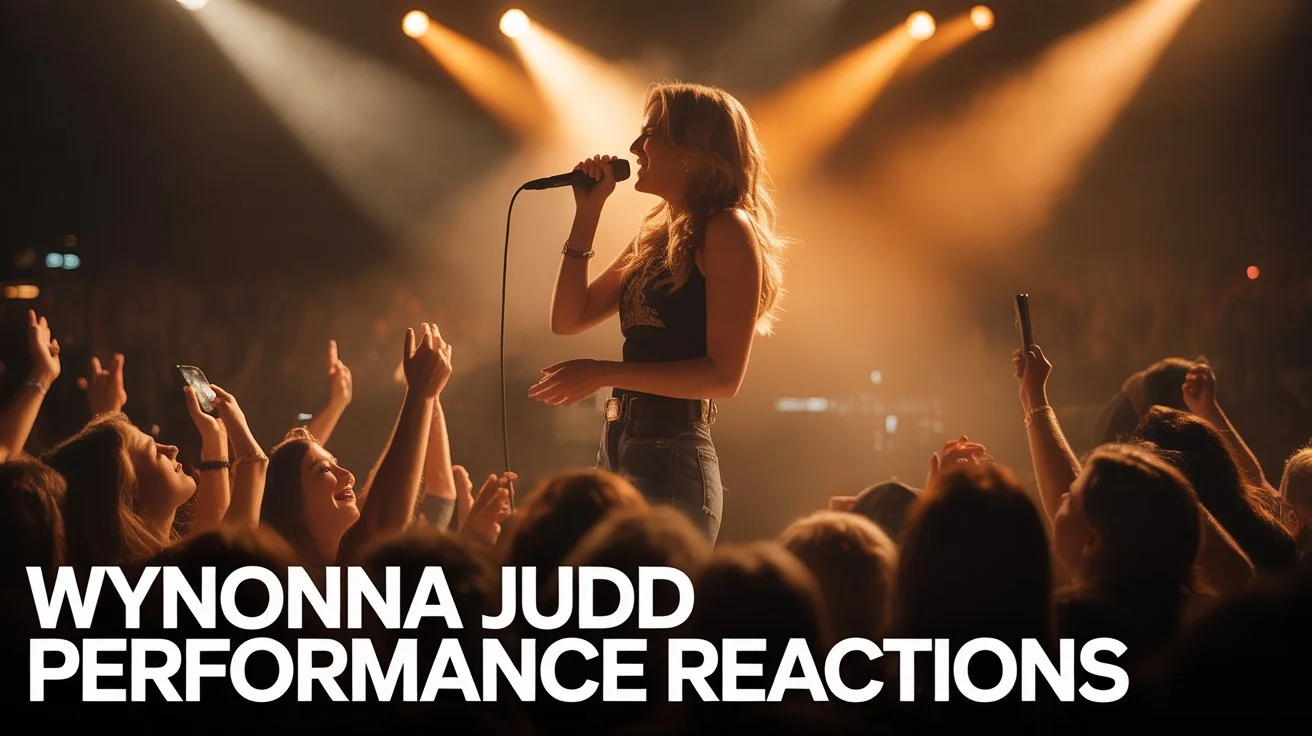
Wynonna Judd performance reactions reveal something powerful about live music’s emotional impact. When she takes the stage, audiences don’t just watch a concert—they experience collective catharsis that leaves many visibly moved and forever changed. Fans consistently describe tears, chills, and unexpected emotional release during her shows.
Social media fills with videos of audience members crying, singing through broken voices, and processing deep personal grief alongside strangers. These aren’t isolated incidents but predictable patterns that define her live performances. Understanding why Wynonna Judd performance reactions are so intense requires looking beyond vocal ability. It’s the combination of technical mastery, lived trauma, complete vulnerability, and her unique ability to transform massive venues into intimate healing spaces.
What Makes Wynonna Judd’s Live Performances So Emotionally Powerful
Wynonna possesses a rare contralto range that creates physical resonance in listeners. When she hits certain notes, audiences feel them in their chest and throat—not just hear them.
But technical skill alone doesn’t explain the tears. Plenty of perfect singers leave audiences impressed yet emotionally untouched. The difference lies in her complete surrender to each song.
She doesn’t hide her emotional struggle. If a lyric connects to her mother Naomi’s death or personal loss, that pain shows on her face. Her voice might crack. She might pause to gather herself.
These unpolished moments generate the strongest Wynonna Judd performance reactions. They give audiences permission to drop their own emotional guards and feel openly.
The Psychology Behind Audience Tears at Wynonna Concerts
Collective crying follows predictable psychological patterns. When we watch genuine emotion, our mirror neurons fire, triggering similar feelings whether we’re consciously aware or not.
Her storytelling between songs primes this response. She shares honest reflections about what songs mean now, how they’ve evolved since The Judds era, and why certain lyrics hit differently after loss and resilience.
This creates parasocial relationships—fans feel they know her personally. Her openness about anxiety, family trauma, and grief makes her relatable rather than distant.
The group setting amplifies everything:
- Seeing others cry permits one to cry
- Hearing strangers sing songs that marked our own life milestones creates an instant connection.
- Shared silence followed by emotional release becomes a communal experience
When Personal Grief Meets Public Performance
Naomi Judd’s April 2022 death fundamentally transformed Wynonna’s stage presence. Performing songs they’d sung together at the Grand Ole Opry and other venues became acts of public mourning.
“Love Can Build a Bridge” now carries impossible weight. Video clips from her first performances after her mother’s passing show audiences visibly shaken, unable to sing along without breaking down.
Wynonna doesn’t perform through grief—she performs with it. This honesty turns concerts into shared healing experiences where fans bring their own losses: parents, partners, children, versions of themselves they’ve had to bury.
The unspoken contract becomes clear: she’ll be honest about pain if audiences sit with theirs. That mutual vulnerability creates the intensity observers find surprising.
Signature Performance Moments That Went Viral
The 2022 CMT Music Awards tribute to The Judds became one of country music’s most-watched emotional moments. Wynonna’s voice held steady until the final chorus of “Love Can Build a Bridge,” when grief overwhelmed technical perfection.
Social media captured these powerful instances:
| Platform | Viral Moment | Views | Impact |
| TikTok | Grand Ole Opry breakdown | 3M+ | Introduced younger audiences |
| Festival performance 2025 | 1.5M+ | Cross-generational sharing | |
| YouTube | CMT Awards tribute | 5M+ | Mainstream recognition |
Reaction video creators—many hearing her for the first time—express shock at the emotional gut-punch her delivery produces. Comments consistently mention surprise: “I had no idea she was this powerful,” or “her voice gave me chills.”
The clips work because they’re genuine. No theatrical staging or planned drama. Just veteran vulnerability, and audiences responding to rare authenticity in country music performances.
Vocal Evolution: What Fans Notice About Her Voice Today
Wynonna’s voice has matured considerably since The Judds’ 1980s and 1990s peak. The range remains impressive, but the tone has deepened and gained texture—what fans call a “weathered quality.”
Critics compare her 2025 and 2026 performances to recordings from three decades earlier. The technical control persists—sustained notes, dynamic range, shifting from delicate phrasing to full power within one song.
Many fans prefer her current voice:
- The slight rasp suggests lived experience
- Deeper resonance carries emotional weight
- Subtle imperfections feel authentic
- She sounds like someone who’s survived, not someone performing survival
This authenticity trumps technical perfection. Audiences aren’t attending vocal competitions—they’re seeking connection, and the “imperfections” strengthen that bond.
The Setlist Strategy: Songs That Guarantee Emotional Reactions
The Judds Catalog and Nostalgia Triggers
Opening with “Mama He’s Crazy” or “Grandpa” immediately transports longtime fans to specific memories. First dances at weddings. Road trips with parents are now gone. Childhood kitchen radios playing country music.
Wynonna introduces these with brief stories—what recording with her mother Naomi felt like at the Grand Ole Opry, how harmonies worked, and why lyrics mean more now after loss.
“Why Not Me” consistently generates the strongest visible reactions. Couples hold hands. Older audience members close their eyes, swaying. Collective nostalgia becomes tangible.
Solo Hits That Showcase Raw Power
“No One Else on Earth” and “She Is His Only Need” shift energy completely. These songs demonstrate pure vocal force that makes audiences involuntarily lean forward.
The crowd sings along differently here—celebratory rather than reflective. Fans stand, some dance. Emotional release shifts from tears to exhilaration, proving she controls the room’s entire emotional spectrum.
Unexpected Covers and Tribute Moments
Gospel selections surprise newer fans. Her renditions of traditional spirituals reveal roots beyond commercial country, connecting through faith and communal tradition.
Rock and blues covers demonstrate an unexpected range. These moments generate the “I had no idea she could do that” reactions, fueling social media sharing across TikTok, Instagram, and YouTube.
How Wynonna Transforms Arena Crowds Into Intimate Gatherings
Even in sold-out arenas or festival crowds holding thousands, Wynonna creates unusual intimacy. She makes sustained eye contact with individual audience members and pauses for unscripted conversations, acknowledging emotional weight.
“I see you” becomes a recurring phrase. She notices people crying, smiling through tears, holding each other. Rather than ignoring reactions, she acknowledges them directly: “Me too. Me too.”
Occasionally, she brings fans onstage—children, elderly couples, once a young woman wearing her mother’s vintage Judds concert shirt. These spontaneous moments create stories that fans retell for years.
She reads energy in real time and adjusts. If a song lands harder than expected, she might repeat the chorus a cappella, letting the moment breathe without instrumentation.
Social Media Reactions: Measuring the Impact
Platform-Specific Trends
TikTok drives much current visibility among younger demographics. Search “Wynonna Judd live,” and you’ll find thousands of concert clips with hashtags like #WynonnaJudd, #TheJudds, and #CountryMusic accumulating millions of monthly views.
Instagram stories show diverse age demographics. Twenty-somethings record reactions alongside sixty-somethings who’ve followed her since The Judds era. Cross-generational appeal becomes visible in real-time documentation.
YouTube comment sections on live performances read like group therapy sessions. Fans share what specific songs meant during divorce, illness, and loss. Others offer support. The community extends beyond venues into digital spaces.
First-Time Listener Reactions
Reaction video creators frequently choose Wynonna performances for content. Their genuine surprise—often visible shock at vocal runs or emotional delivery—introduces her to audiences who might never seek country music.
Common first-time reactions include:
- “Her voice is incredibly powerful.”
- “I didn’t expect to cry.”
- “Why haven’t I heard of her before?”
- “This feels healing and uplifting.”
Comments often mention a disconnect between expectations and reality. Many assume “older country artist” means dated or less powerful. Experience contradicts that immediately.
Festival Appearances and the “Opening Act” Discussion
Throughout 2025, Wynonna appeared as an opening act at several major festivals. Some fans initially expressed surprise about the billing, viewing it as unusual for her legacy status.
Those concerns evaporated quickly. Her sets consistently generated headliner-level presence and crowd response. Social media posts from these events focus less on lineup placement and more on undeniable stage command.
Why billing doesn’t reflect impact:
- Her performance carried emotional weight regardless of placement
- Audience retention during her sets exceeded expectations
- She uses these slots strategically to expose her work to new audiences
- The conversion rate—first-time listeners becoming committed fans—remains remarkably high
Festival organizers noticed. Her placement on future lineups will likely reflect these audience response metrics.
Critical Reception vs. Fan Experience
Music journalists reviewing her concerts typically emphasize technical elements: vocal consistency, control, stage confidence built through decades of experience, and the balance between nostalgia and present-day relevance.
But they often miss what fans experience. The emotional component doesn’t translate into traditional criticism frameworks. How do you objectively measure feeling truly seen and understood?
The disconnect appears clearly:
| Critics Focus On | Fans Experience |
| Vocal technique | Emotional catharsis |
| Setlist construction | Personal healing |
| Professional staging | Intimate connection |
| Musical arrangements | Shared vulnerability |
This gap appears in review comment sections. Fans describe entirely different experiences—less analytical, more visceral. The difference between observing and participating.
What Newer Fans Don’t Know About Her Performance History
The Judds sold out stadiums in the 1980s and early 1990s. Their touring success established Wynonna’s stage presence long before her solo career began.
She’s collaborated with artists across genres—rock, blues, gospel. These experiences expanded her range and approach, and each influence shows in current performances at festivals and venues.
Her journey includes challenges:
- Struggles with panic disorder and stage anxiety
- Conquering fear to perform at major venues
- Transitioning from duo harmony singer to solo powerhouse
- Developing new ways of commanding attention without Naomi’s voice
This context makes her current confidence more meaningful—it’s earned through resilience, not effortless.
Behind the Curtain: The Work That Makes the Magic Happen
Wynonna’s band provides more than accompaniment. They support emotional moments, giving her space when needed, anchoring songs when she’s visibly affected by grief or memories.
Sound engineering varies dramatically between intimate theaters and outdoor festivals. Her team adapts the vocal mix to ensure contralto resonance hits properly regardless of venue size.
The invisible preparation includes:
- Vocal warm-ups and proper rest for stamina
- Rehearsals that account for emotional demands
- Sound checks at each venue
- Mental preparation before songs connected to Naomi
Physical preparation matters for 90-minute sets. The technical work behind seemingly effortless delivery remains invisible to most audiences.
Where to Experience Wynonna Live in 2026
Her 2026 touring schedule includes intimate theater shows and larger festival appearances. Theater dates offer the closest, most emotionally intense experiences with better acoustics for her contralto voice.
What to expect at concerts:
- Typical shows run 90 minutes
- Structured setlists balance The Judds’ catalog, solo hits, and covers
- Several extended storytelling segments between songs
- Emotional peaks during legacy songs like “Love Can Build a Bridge.”
For optimal experience, mid-venue seating provides the best sound quality. Closer seats offer better sight lines for facial expressions and emotional moments. Both create powerful experiences for different reasons.
VIP packages at select venues include meet-and-greet opportunities. Fans consistently describe these brief interactions as surprisingly genuine and personal—consistent with her stage presence.
The Lasting Impact: Why These Reactions Matter
Audience response directly influences her career decisions and touring strategy. She pays attention to which songs generate the strongest reactions, which stories resonate, and where emotional connection happens most powerfully.
In country music, live performance remains the ultimate validation. Record sales and streaming numbers matter, but the ability to move a room—to create shared emotional experiences—defines legacy.
Her concerts represent something beyond entertainment:
- Communal processing spaces for grief and joy
- Places where nostalgia and hope coexist
- Opportunities for strangers to become a temporary family through shared vulnerability
- Healing experiences that audiences carry forward
The community forming around her extends beyond the venue. Fans connect online afterward through social media, share their experiences, and support each other. The concert becomes the starting point for an ongoing relationship.
Final thoughts
Wynonna Judd performance reactions matter because they remind us what live music accomplishes when technical excellence meets complete emotional honesty. In an age of polished perfection and carefully controlled images, her willingness to be visibly affected—to let audiences witness genuine emotion—creates rare and powerful experiences.
She transforms concerts into shared processing spaces where strangers become temporary family through vulnerability and music. That’s why people cry at her shows. That’s why they leave changed, even if only a little. And that’s why Wynonna Judd performance reactions continue resonating across generations.
Frequently Asked Questions
Why do people cry at Wynonna Judd concerts?
Her vocal power, combined with emotional vulnerability, creates permission for audiences to openly process their own grief, loss, and memories alongside strangers.
Is Wynonna Judd still touring in 2026?
Yes, she maintains active touring with theater dates and festival appearances throughout 2026. Check her official website for current tour schedules and locations.
What are Wynonna Judd’s most emotional songs to perform?
“Love Can Build a Bridge,” “Mama He’s Crazy,” and “Why Not Me” consistently generate the strongest emotional reactions, especially since Naomi Judd’s April 2022 death.
How long is a typical Wynonna Judd concert?
Most shows run approximately 90 minutes, featuring The Judds classics, solo hits, covers, and personal storytelling segments between songs for context.
Has Wynonna’s voice changed over the years?
Her voice has deepened and gained a weathered texture while maintaining power and control. Many longtime fans prefer her current, more mature vocal quality.
What do first-time concert-goers say about seeing Wynonna live?
They consistently express surprise at her vocal power and emotional depth, often saying they had no idea live performances could feel personally affecting.
How does Wynonna interact with her audience during shows?
She makes direct eye contact, acknowledges emotional reactions in the crowd, shares personal stories about songs, and occasionally brings fans onstage for a connection.
