

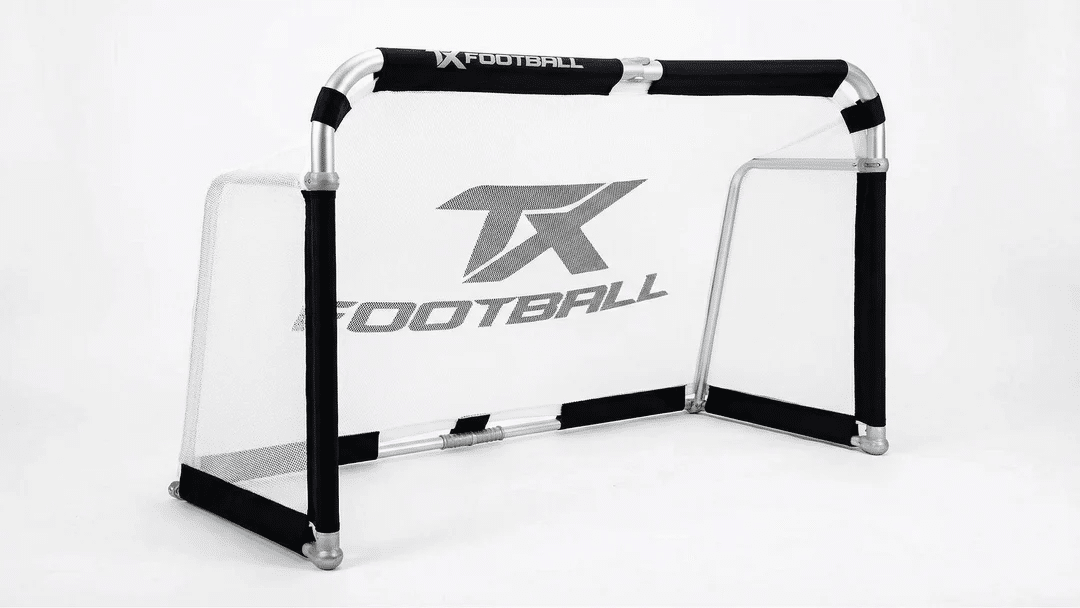
You know that feeling when you rock up to the park with a ball but no goal, and suddenly the whole session feels a bit pointless? Yeah. Every footballer knows it. That restless energy of wanting to shoot, wanting to score, but having nothing to aim at. Portable soccer goals fix that problem completely. They travel with you, set up in minutes, and turn any patch of grass into a proper training ground.
For Australian players and families, they’ve become an absolute staple, whether you’re coaching juniors on a Saturday, drilling solo at the local oval, or setting up a quick game in the backyard before dinner. So let’s talk about what actually makes a good portable goal, what to look for when you buy, and which setups work best for different situations.
Why Portable Goals Are Worth Having
There’s a tendency to think of portable goals as a casual thing, a backyard toy almost. But that’s underselling them massively. Professional academies use portable goals for small-sided sessions precisely because they’re flexible and fast to reposition. You can run a rondo, set up a finishing drill, and work on goalkeeper distribution, all without needing a groundskeeper to unlock a pitch.
For grassroots footballers in Australia, that kind of flexibility is genuinely valuable. Club training nights are crowded. Pitch time is limited. If you want extra reps on your finishing or your kid wants to work on their first touch after school, a portable goal at home becomes part of your development routine. That’s not a small thing. The players who improve fastest are the ones who find ways to train outside of official sessions, and portable soccer goals make that possible without needing to book a facility or drag along a teammate.
Beyond solo work, they also transform local parks into proper playing spaces. A couple of portable goals, a few friends, and suddenly you’ve got a legitimate small-sided game going on a Sunday morning. That kind of informal football is where so many players fall in love with the game in the first place.
Foldable Soccer Goals: Easy to Move, Easy to Store
For most people, foldable soccer goals are the right call. They collapse flat, fit into a carry bag, and take up almost no room in your car boot or shed. Setup takes under two minutes once you know the drill.
Build quality has improved a lot in recent years. The better options use reinforced steel or fibreglass frames with locking joints that don’t loosen up after a few sessions. Nets are sturdier too, holding their shape through consistent ball impact rather than sagging out after a month of use. For club coaches running multiple training stations, foldable designs are also easy to store in bulk, which makes life a lot simpler on game day.
Portable Soccer Goals for Kids: Size Actually Matters
A common mistake is buying a full-size goal, thinking a kid will grow into it. An oversized goal actually slows development. Young players stop picking corners because everything goes in anyway. Portable soccer goals for kids should match junior size standards for their age group, typically around 3 to 4 metres wide for under-8s and under-10s in Australia. A properly sized goal teaches placement, gives young goalkeepers a realistic chance of saving shots, and makes the whole session more competitive and useful.
Look for rounded connectors, no sharp edges, and include ground pegs. A goal that slides around every time someone scores gets old very quickly.
What to Check Before You Buy
Not all portable goals are built the same. Frame joints are the first thing worth scrutinising. Clip-together joints that lock firmly outlast push-fit connections that loosen with use. Steel handles wet conditions well; fibreglass is lighter if you’re moving goals around constantly.
Net quality is where a lot of cheaper goals cut corners. In Australia, UV degradation is a real issue, so look for UV-resistant netting with reinforced attachment edges. Ground pegs should be thick metal, not thin plastic that bends on first use. If you’re setting up on artificial turf or a hard surface, a weighted base is worth considering instead.
Where to Buy Portable Soccer Goals in Australia
Shop Online for the Best Range and Value
Online stores give you the best selection, proper product descriptions with real dimensions, and reviews from actual players and coaches rather than generic ratings. TX Football ships football gear across Australia and internationally, so whether you’re in Melbourne, Brisbane, Perth, or somewhere more remote, getting quality gear to your door is straightforward.
Check Dimensions Before You Order
Measure your space first. A goal that’s too wide for your backyard or training area creates problems in practice and builds bad shooting habits over time. Also, check the assembled height and net depth, because some compact options cut corners on depth, and you notice it every time a shot hits the back of the net.
Buying for a Club or School?
Having four or six portable soccer goals instead of two completely changes what’s possible in a training session. Running stations, small-sided games, or split-group drills all become far easier. If you’re buying in volume, look for retailers who offer bulk pricing rather than paying full price per goal.
Conclusion
A good portable soccer goal removes every excuse not to train. No pitch booking, no waiting, no organising. Just a ball, a goal, and the work. Buy the right one, and it’ll be one of the best investments you make in your football this year.
