

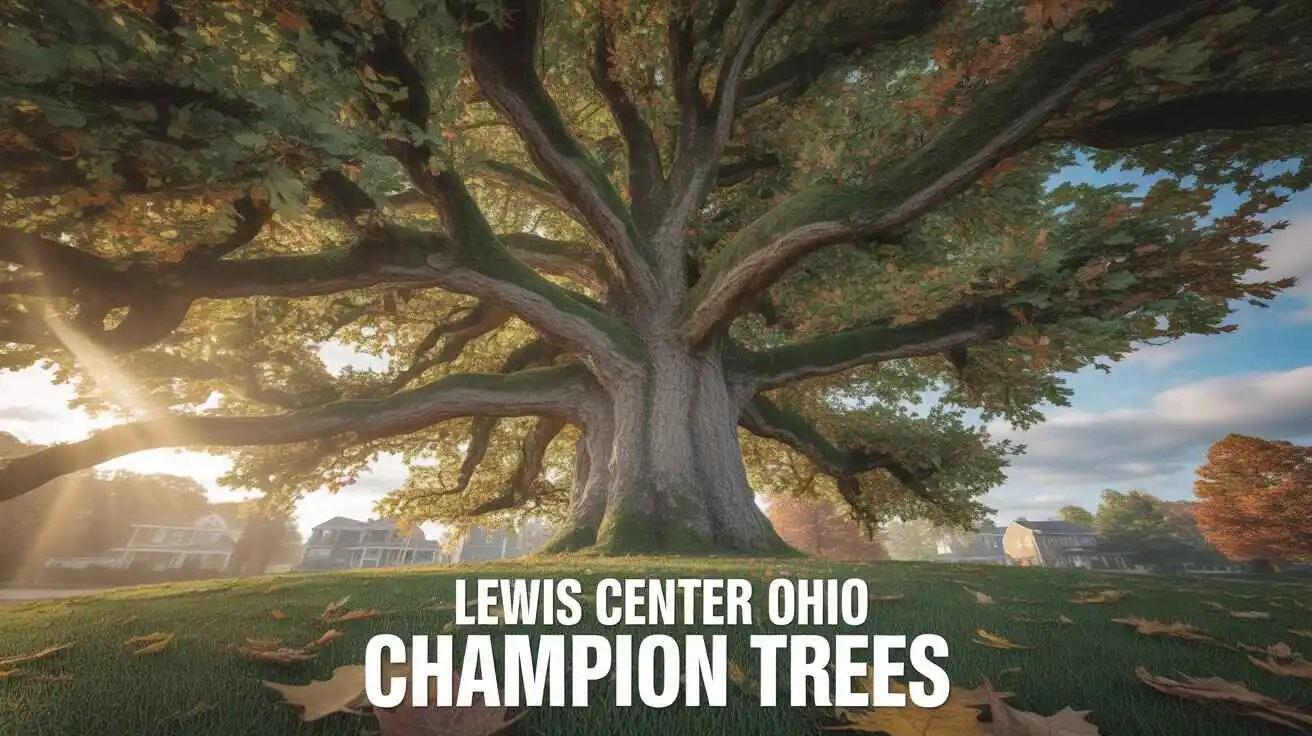
Standing in the shadow of a 300-year-old white oak changes your perspective. These aren’t just trees—they’re living monuments that have watched Lewis Center transform from farmland to thriving community. Lewis Center Ohio champion trees represent some of the most impressive specimens in central Ohio.
The area’s legendary white oak, measuring 233 inches around its massive trunk, draws tree enthusiasts from across the state. Delaware County’s glacial soil and open growing conditions have created the perfect environment for champion-caliber trees. While development continues, these ancient survivors remain rooted, offering a tangible connection to Ohio’s natural heritage that you can visit and experience firsthand.
What Makes Lewis Center Ohio Champion Trees Special?
Lewis Center has earned quiet recognition among arborists as Delaware County’s “giant tree capital.” This reputation comes from documented measurements and preserved specimens that outsize typical trees by staggering margins.
The community’s flagship specimen stands as the legendary white oak with a trunk circumference of 233 inches—that’s 19.4 feet around. Its crown spreads 124 feet across, creating shade covering an area larger than most residential lots.
Why these trees survived development:
- Mid-20th century builders designed neighborhoods around natural landmarks
- Streets curved to protect root zones instead of removing ancient oaks
- Private landowners recognized preservation value over clearing land
- Community awareness protected specimens predating the American Revolution
The glacial deposits that shaped this region left behind deep, fertile soil. This created ideal conditions for establishing strong root systems.
Combined with the area’s historical use as farmland and open pasture, trees had space to grow outward as much as upward. This created the massive trunks and broad canopies that define champion status.
Walking among these giants connects you emotionally to natural history. Few modern experiences can match standing beneath a tree that began growing before the United States existed.
How Champion Trees Are Measured and Recognized in Ohio
Ohio uses a standardized formula to identify champion trees objectively. This system removes subjective opinions and creates consistent rankings across the state.
The Champion Tree Formula:
(Trunk Circumference in inches) + (Height in feet) + (¼ Crown Spread in feet) = Total Points
Measurement standards:
- Trunk circumference: Measured at exactly 4.5 feet above ground level
- Total height: From base to the highest living point
- Crown spread: Average width of canopy in multiple directions
This formula serves an important purpose. A tree doesn’t need to be the tallest to become a champion.
A shorter tree with a massive trunk and wide crown can outscore a taller but narrower specimen. This rewards overall size and presence rather than just height.
Who can nominate trees:
Anyone can nominate a tree in Ohio. The community-driven process has documented many of the state’s largest trees and continues revealing new champions.
However, you must obtain permission from property owners before measuring trees on private land. Respect for private property remains essential in the nomination process.
The Legendary Lewis Center Ohio Champion Trees, White Oak
The numbers tell only part of the story. This white oak’s 233-inch circumference translates to a trunk nearly 20 feet around.
That’s so massive that several adults linking hands couldn’t encircle it. The sheer scale becomes obvious only when you stand beside it.
Vital Statistics and Records
| Measurement | Size | Context |
| Trunk Circumference | 233 inches | 19.4 feet around |
| Height | 65-71 feet | 6-story building equivalent |
| Crown Spread | 124 feet | Larger than most home lots |
| Estimated Age | 250-300 years | Planted 1700s-1770s |
Historical Journey from Pasture to Preservation
Local history suggests the tree served as a pasture oak for early farmers. Its open growing conditions allowed the crown to spread far wider than forest-grown white oaks.
Forest trees compete for sunlight and grow taller but narrower. Pasture trees develop differently—spreading outward with massive horizontal branches.
When residential development arrived in the mid-1900s, builders faced a choice. Rather than removing the centuries-old oak, they designed the surrounding neighborhood to preserve it.
Streets curve around their root zone. Nearby homes maintain respectful distances from the ancient giant.
This integration of natural heritage into suburban development offers a model that other communities might follow. The tree remains on private property, but its presence enriches the entire neighborhood.
How to Visit Responsibly
Best viewing seasons:
- Spring: Fresh green foliage highlights the massive crown scale
- Autumn: Deep red and bronze leaf colors create dramatic displays
Photography tips:
- Early morning or late afternoon provides the best lighting
- Wide-angle lens captures full canopy spread
- View respectfully from public streets (the tree is on private property)
Always remember that while the tree stands as a community landmark, it grows on private property. Viewing from the street shows respect for homeowners while still allowing you to appreciate this natural wonder.
Other Notable Champion Trees Near Lewis Center
The legendary white oak isn’t Lewis Center’s only impressive specimen. Several other champion-caliber trees grow throughout the area.
Each species brings distinct characteristics worth discovering during your visit.
Lewis Center area specimens:
- Bur oak: Massive trunks with deeply furrowed bark
- Silver maple: Rapid growth in rich riparian soil
- Sycamore: Striking white bark and broad leaves
Franklin County champions (nearby):
| Species | Location |
| American Elm | Goodale Park, Columbus |
| Grey Dogwood | Schiller Park, Columbus |
| Turkish Filbert | Schiller Park, Columbus |
| Chinese Smoketree | Columbus public parks |
| European Ash | Goodale Park, Columbus |
The difference between Lewis Center’s trees and urban park specimens often comes down to growing conditions. Park trees receive professional care and protection from arborists.
But suburban specimens like the Lewis Center white oak grew naturally with minimal human intervention. This makes their size even more remarkable—they achieved champion status through favorable conditions alone.
School campuses and historic cemeteries often harbor overlooked champions. These properties change slowly, allowing trees to mature undisturbed for decades.
Why Lewis Center Grows Champion-Caliber Trees
Geography played a crucial role in creating ideal conditions. Ancient glaciers moved across central Ohio, grinding bedrock and depositing thick layers of mineral-rich soil.
When the ice retreated, it left behind the deep, well-drained earth that long-lived species need.
Natural advantages:
- Glacial deposits: Deep, well-drained soil supporting strong root systems
- Historical farmland: Open pasture provided space without forest competition
- Adequate rainfall: Central Ohio’s climate avoids extreme weather patterns
- Long-lived species thrive: White oak, bur oak, and tulip tree prefer these conditions
Their root systems penetrate deep into the soil. This anchors massive trunks and provides access to water during droughts.
A pasture oak grows differently than a forest oak—spreading wide rather than reaching tall. This develops the broad crown and thick trunk that score highly in champion calculations.
How to Nominate a Lewis Center Ohio Champion Trees
Discovering a potential champion starts with observation. If you notice an unusually large tree on your property, you can document and nominate it.
With permission to access private land, you can help identify previously unknown champions.
Step-by-step nomination process:
- Measure trunk circumference at 4.5 feet above ground using flexible measuring tape
- Measure total height using a clinometer or smartphone app designed for trees
- Measure crown spread in four directions (north, south, east, west) and average
- Calculate total points: Circumference (inches) + Height (feet) + (Crown Spread ÷ 4)
- Compare to the current champions for that species in Ohio
- Submit documentation to the Ohio Forestry Association with photos and GPS coordinates
Required permissions:
Always obtain landowner permission before measuring trees on private property. This respectful approach maintains good community relationships.
Recent discoveries by Lewis Center residents have added several trees to tracking databases. Your backyard might harbor the next state champion.
Threats Facing Champion Trees and How You Can Help
Development pressure in Delaware County continues to accelerate. As Lewis Center expands, mature trees face increasing threats.
Construction, soil compaction, and root zone disturbance all compromise tree health.
Primary threats:
- Soil compaction: Heavy equipment suffocates roots needing oxygen
- Grade changes: Burial or exposure of critical root systems
- Storm damage: Broad crowns catch wind; aging trunks develop decay
- Construction stress: Utility work severs major structural roots
Large trees show remarkable resilience, but they remain vulnerable. The same broad crowns that make trees impressive also catch wind during storms.
Aging trunks develop internal decay that reduces structural strength.
How homeowners can protect champion trees:
- Protect root zones from compaction during any construction
- Maintain proper mulch depth (avoid volcano-style mounding)
- Consult certified arborists before work near large trees
- Document and register significant specimens on your property
Communities can implement tree preservation ordinances. These identify significant specimens and require protection during development.
If you own property with large trees, consider having them evaluated by a certified arborist.
Visiting Lewis Center Ohio Champion Trees: Practical Guide
Planning a champion tree tour requires respect and preparation. Many specimens grow on private property.
Viewing from public areas maintains appropriate boundaries while still allowing you to appreciate these natural wonders.
Best seasons for viewing:
- Spring: Vivid green foliage against clear skies
- Fall: Red, bronze, and gold color displays with comfortable temperatures
Photography essentials:
- Wide-angle lens for full canopy capture
- Early morning light for best illumination
- Respect private property boundaries
Bring a camera with a wide-angle lens to capture the full canopy spread. Early morning light provides the best illumination and fewer shadows.
Nearby attractions to combine:
Lewis Center and Delaware County offer additional stops to enhance your visit. Historical sites, parks, and local dining create a full-day experience.
Accessibility varies by location, so plan accordingly if mobility is a concern.
Final Thoughts:
Lewis Center Ohio champion trees represent more than impressive measurements—they’re irreplaceable connections to natural history. The legendary white oak and surrounding specimens have survived centuries through favorable conditions and thoughtful preservation.
As development continues, protecting these giants requires community awareness and active stewardship. Whether you visit, nominate, or care for champion trees on your property, you help preserve Delaware County’s living heritage.
These trees stood long before us and deserve to stand long after. Their presence enriches the Lewis Center in ways no modern development can replicate.
Frequently Asked Questions
Where is the largest champion tree located in Lewis Center, Ohio?
The legendary white oak witha 233-inch circumference stands in a residential neighborhood, preserved since mid-20th century development around the tree’s location.
How old is the Lewis Center Ohio champion trees white oak?
Experts estimate the white oak is approximately 250-300 years old, likely planted in the 1700s when the area was farmland and pasture.
Can I visit the Lewis Center Ohio champion trees on private property?
Many champion trees grow on private land. Always request permission from property owners before visiting, and respect boundaries when viewing from public areas.
What qualifies a tree as a champion in Ohio?
A champion tree must be the largest of its species, measured by a formula combining trunk circumference, height, and crown spread dimensions.
How can I nominate a large tree in Lewis Center?
Measure the trunk circumference, height, and crown spread, obtain the owner’s permission, and then submit documentation to Ohio’s official champion tree registry program.
Does the law protect the Lewis Center Ohio champion trees?
Most champion trees lack automatic legal protection. Preservation depends on landowner stewardship, local tree ordinances, and community awareness supporting their conservation.
What other tree species are champions near Lewis Center?
Besides white oak, the region hosts champion bur oak, silver maple, American elm, and sycamore specimens in Delaware and Franklin Counties.
