

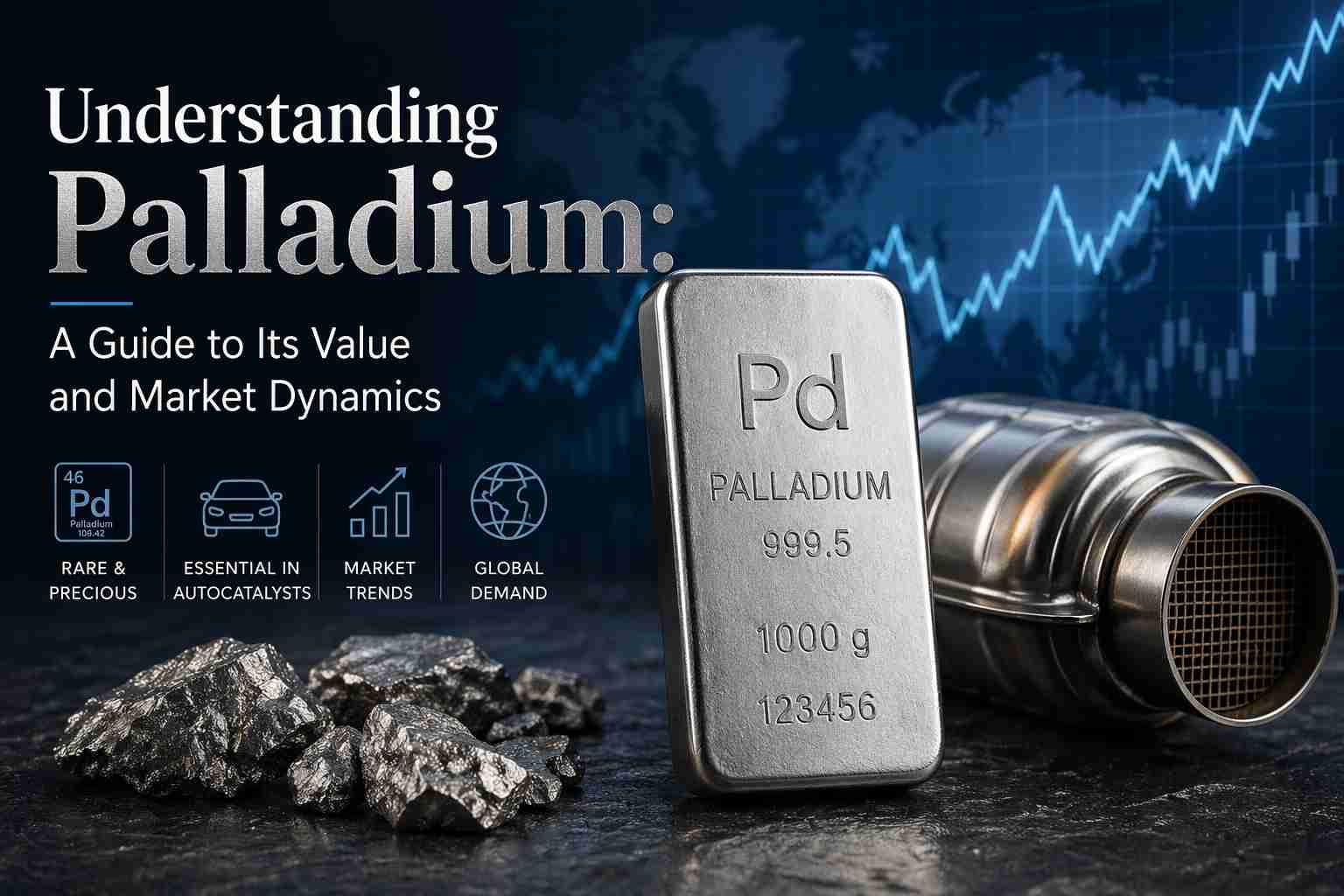
Palladium, a lustrous silvery-white metal, belongs to the platinum group metals (PGMs) and has garnered significant attention in recent years due to its increasing industrial demand and fluctuating market value. Often overshadowed by its more famous counterparts, gold and silver, palladium plays a crucial role in various sectors, from automotive catalysts to electronics and dentistry. Its unique chemical properties, including its high melting point, excellent catalytic activity, and ability to absorb hydrogen, make it indispensable in modern technology and various industrial processes.
For investors, industrial users, and individuals looking to sell precious metals, understanding the intricate dynamics of palladium’s value is essential to making informed decisions in a market known for its volatility and rapid price shifts.
Navigating the precious metals market, especially for a commodity like palladium, requires access to reliable information and transparent pricing mechanisms. Whether you are a private seller with scrap palladium jewellery, an investor with palladium bars or coins, or a trade customer dealing with industrial palladium, knowing the live market rates and understanding the valuation process is paramount.
Services that offer real-time valuation tools and expert insights can significantly aid in this process, providing clarity on how much your palladium might be worth. For those in the UK seeking to understand current palladium prices and valuation, resources like the London Gold Centre offer comprehensive calculators and expert insights, ensuring you receive a fair and accurate assessment of your assets based on the latest market data.
The Ascendance of Palladium: Demand, Supply, and Market Drivers
The narrative of palladium’s market ascent is predominantly interwoven with the global automotive industry. A staggering proportion, approximately 80-85%, of the world’s annual palladium supply is consumed in the production of catalytic converters. These devices are integral to modern gasoline-powered vehicles, where they play a critical role in converting harmful pollutants like carbon monoxide, nitrogen oxides, and unburnt hydrocarbons into less toxic substances.
As environmental regulations worldwide, particularly in major automotive markets such as China, Europe, and North America, have become increasingly stringent, the demand for palladium in these emission control systems has surged dramatically. This sustained and growing demand, coupled with a historically constrained and geographically concentrated supply—primarily from Russia and South Africa—has been the principal force driving palladium prices to unprecedented highs, often surpassing the value of gold and even platinum.
Beyond its dominant role in automotive catalysts, palladium’s versatility extends to several other critical industries. In the electronics sector, it is a key component in multi-layer ceramic capacitors (MLCCs), which are ubiquitous in everything from smartphones to advanced computing systems. Its excellent conductivity and corrosion resistance also make it valuable in electrical connectors and plating.
In dentistry, palladium alloys are favored for crowns, bridges, and other restorative applications due to their biocompatibility, strength, and resistance to tarnish. Furthermore, its catalytic properties are exploited in various chemical processes, including hydrogenation and petroleum refining. The diversification of its industrial uses, while secondary to automotive demand, contributes to its overall market resilience and long-term demand outlook.
However, it is crucial to acknowledge that geopolitical events, significant shifts in automotive technology (such as a widespread transition to electric vehicles), and fluctuations in mining output can all exert substantial influence on its price trajectory, leading to periods of significant volatility.
Unpacking the Factors Influencing Palladium Prices
The price of palladium is not a static figure but rather a dynamic reflection of a complex interplay of global economic, industrial, and geopolitical factors. Understanding these underlying forces is key for investors, traders, and sellers to anticipate market movements and identify optimal times for transactions.
1. Supply and Demand Dynamics: The Core Driver
As previously highlighted, industrial demand, predominantly from the automotive sector, remains the most significant driver. Any shifts in global vehicle production, changes in emissions standards (e.g., Euro 6, China 6), or the adoption rate of alternative powertrain technologies (e.g., hybrid vehicles still use catalytic converters, but fully electric vehicles do not) can have a profound impact on demand.
On the supply side, palladium production is highly concentrated, with Russia and South Africa accounting for the vast majority. This geographical concentration makes the supply chain vulnerable to disruptions stemming from mining strikes, labor disputes, political instability, regulatory changes, or even natural disasters.
Unlike gold, which is often hoarded as a traditional store of value and a hedge against inflation, palladium’s price is much more closely tied to its immediate industrial consumption, making it more sensitive to real-world economic activity.
2. Global Economic Health and Industrial Output
A robust global economy generally correlates with increased industrial activity, higher manufacturing output, and stronger consumer demand for new vehicles. This, in turn, translates into elevated demand for palladium. Conversely, periods of economic contraction, recessions, or significant industrial slowdowns can lead to reduced manufacturing and lower vehicle sales, thereby diminishing demand for palladium and exerting downward pressure on its prices.
Broader investor sentiment, often influenced by macroeconomic indicators such as GDP growth, inflation rates, and interest rate policies, also plays a role in how market participants perceive palladium’s future value.
3. Geopolitical Events and Trade Relations
Given the significant portion of palladium supply originating from Russia, geopolitical tensions involving this region can introduce considerable price volatility. Sanctions, trade disputes, export restrictions, or political instability in major producing nations can disrupt supply chains, leading to market speculation and price spikes as traders react to potential shortages.
Similarly, trade agreements or conflicts between major consuming nations can also indirectly affect demand and, consequently, prices.
4. Currency Fluctuations: The Dollar’s Influence
Palladium, like most other globally traded commodities, is primarily priced in US dollars. Consequently, fluctuations in the value of the US dollar against other major currencies can significantly impact its price for international buyers. A weaker dollar makes palladium cheaper for buyers holding stronger currencies, potentially stimulating demand and pushing prices up.
Conversely, a stronger dollar makes palladium more expensive for non-US buyers, which can dampen demand and lead to price declines.
5. Investment Demand and Speculation
While industrial demand is the dominant force, investment demand for palladium also contributes to its market price. Investors can gain exposure through physical bullion (bars and coins), exchange-traded funds (ETFs), or futures contracts. During times of economic uncertainty or when other asset classes are underperforming, some investors may turn to precious metals, including palladium, as a perceived haven or a means of diversifying their portfolios.
However, palladium’s strong industrial ties mean its investment behavior can differ from traditional safe-haven assets like gold, often exhibiting higher volatility due to its sensitivity to industrial cycles and technological shifts. Speculative trading by institutional investors and hedge funds can also amplify price movements in the short term.
Selling Palladium: A Comprehensive Guide to Valuation and Transaction
For individuals or businesses considering selling palladium, whether it’s an old piece of jewellery, an investment-grade bar, or industrial scrap, a clear understanding of the selling process and accurate valuation methods is paramount to ensuring a fair and transparent transaction.
1. Purity and Hallmarks: The Foundation of Value
The intrinsic value of your palladium item is fundamentally determined by its purity. Investment-grade palladium, often referred to as fine palladium, typically boasts a purity of 999.5 (99.95% pure). Jewellery, on the other hand, may contain lower purities, commonly indicated by hallmarks such as Pd950 (95% pure) or Pd500 (50% pure).
Reputable buyers employ advanced, non-destructive testing methods, such as X-ray fluorescence (XRF) analysis, to accurately determine the precise metal content without causing any damage to the item. This sophisticated testing is particularly crucial for items made of mixed metals, those with unclear or absent markings, or complex scrap materials.
2. Accurate Weight Measurement: A Key Metric
The weight of your palladium is a primary and non-negotiable factor in its valuation. Precious metals are universally measured in grams or troy ounces. The weight must be accurately determined by a trusted and certified dealer using calibrated scales.
Many online calculators provide an estimated value by allowing you to input the weight in grams, which then calculates a preliminary figure based on the current live market rates. Always verify the weight independently if possible or ensure the dealer’s scales are visible and certified.
3. Leveraging Live Market Rates: Real-Time Valuation
Palladium prices are not static; they fluctuate constantly throughout the trading day, influenced by global supply and demand. A reputable and transparent buyer will always base their offer on the live market rate at the precise time of sale. This practice ensures fairness and that you receive a price that accurately reflects the current global market conditions.
Sellers should check the live price per gram or per troy ounce immediately before engaging in a transaction to have a benchmark for comparison.
4. Exploring Selling Routes: In-Store vs. Secure Postal Services
Sellers typically have two primary avenues for selling their palladium: visiting a physical location or utilizing a secure postal service. Visiting a physical store, such as a dedicated precious metals dealer in a financial district like Hatton Garden, offers the advantage of immediate testing, verification, and often same-day payment. This option is particularly suitable for higher-value items or for individuals who prefer a face-to-face interaction and instant gratification.
Conversely, secure postal services provide a convenient alternative, especially for those not geographically close to a dealer. This method requires careful packaging and insured shipping, and while convenient, it may involve a slightly longer processing time. Regardless of the chosen method, always ensure the service is fully insured and operated by a reputable entity to protect your valuable assets during transit.
5. Transparency and Fee Structures: Avoiding Hidden Costs
When selling palladium, it is paramount to select a dealer who operates with complete transparency regarding their pricing and fee structures. The quoted price should explicitly state the net payout you will receive after any and all deductions, commissions, or processing fees. Reputable dealers will provide a clear, itemized breakdown of their valuation process, explaining how the final offer is calculated based on purity, weight, and the live market rate. Be wary of buyers who are vague about their fees or who offer significantly higher prices without clear justification, as this can often lead to unexpected deductions.
Palladium as an Investment Vehicle
While palladium’s primary utility lies in its industrial applications, it has also emerged as a significant investment vehicle. Investors can gain exposure to palladium through various means, including physical bullion (bars and coins), exchange-traded funds (ETFs) that track its price, or futures contracts.
Its inherent price volatility, largely driven by the dynamic interplay of industrial demand and supply constraints, can present significant opportunities for capital appreciation, but it also carries commensurate risks. This makes it a more speculative investment compared to gold.
For those considering palladium as a component of a diversified investment portfolio, it is crucial to diligently monitor global economic trends, advancements, and shifts within the automotive industry, and the geopolitical stability of major palladium-producing regions. Comparing palladium’s performance against other precious metals like gold, silver, and platinum can also provide valuable insights into its relative value proposition and potential for growth.
The decision to invest in or divest from palladium should always be predicated on thorough research, a clear understanding of market fundamentals, and, if necessary, consultation with qualified financial advisors to align with individual risk tolerance and investment objectives.
Conclusion
Palladium is a fascinating and economically significant precious metal, occupying a unique position within the global commodities market. Its value is intricately linked to global industrial demand, particularly from the automotive sector, and the complexities of its concentrated supply chain.
From its indispensable role in reducing harmful vehicle emissions to its growing presence in electronics and dentistry, palladium’s importance in the modern world continues to expand. For anyone looking to engage with the palladium market, whether as a seller seeking to monetize assets or an investor aiming for portfolio diversification, understanding the multifaceted factors that influence its price and the nuances of its valuation is key.
By leveraging reliable resources, staying informed about live market data, and seeking transparent valuation services from reputable dealers like londongoldcentre.co.uk, individuals can confidently navigate this unique and often volatile market, ensuring they achieve the best possible value for their palladium assets. Whether you’re assessing scrap jewellery or investment-grade bullion, a well-informed approach is always the smartest strategy.
