


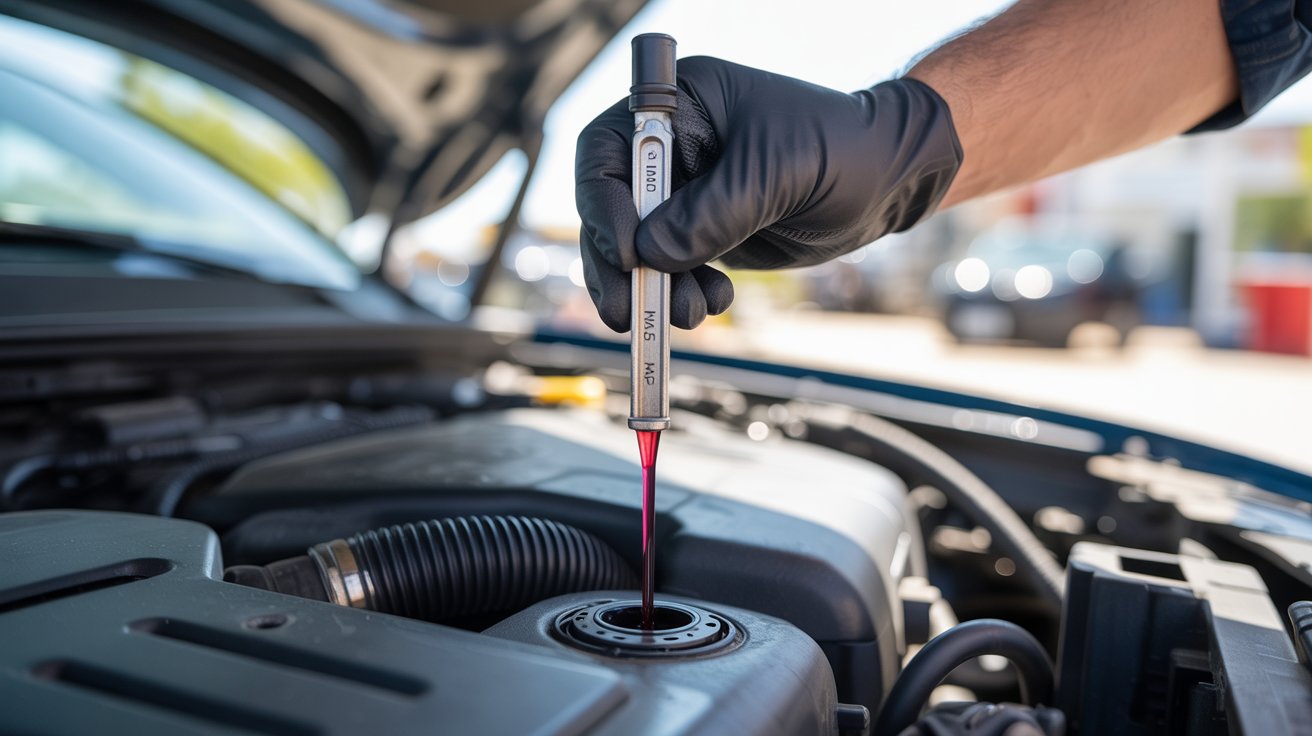
Most drivers overlook their transmission until grinding noises or delayed engagement force attention. Learning how to check transmission fluid transforms reactive repairs into preventive care. Your vehicle’s transmission works harder than most components, transferring engine power to wheels through precise hydraulic pressure and lubrication. Whether you drive through stop-and-go traffic in cities or handle frequent short trips, transmission fluid quality directly impacts shift performance.
Modern vehicles sometimes lack traditional dipsticks, making professional service necessary for sealed systems. However, knowing how to check transmission fluid remains essential for models equipped with accessible measurement tools. This guide walks through proper inspection techniques, from warming up your engine to interpreting color saturation and consistency. Before starting, gather a clean rag, funnel, and your owner’s manual for specific gear recommendations.
What Is Transmission Fluid and Why Does It Matter?
Understanding hydraulic fluid function separates informed owners from those facing expensive transmission failure. Your transmission depends on specific formulations that manufacturers require for proper operation. Using the wrong type, even in small quantities, can result in catastrophic breakdowns.
Critical Functions of Transmission Fluid
Transmission fluid serves multiple vital functions simultaneously:
- Lubrication and Protection: Lubricates internal components while protecting them from corrosion and friction damage.
- Hydraulic Pressure: Maintains hydraulic pressure required for smooth gear transitions during acceleration.
- Cooling System: Prevents overheating as temperatures rise, especially in automatic transmissions that produce higher heat levels.
- Cleaning Process: Assists in removing debris and preventing particle buildup that could enter the transmission.
Heat management represents another critical function. Automatic transmissions produce higher levels of heat compared to manual setups, making cooling properties essential. As temperatures rise throughout your drive, quality fluid prevents overheating that would otherwise pollute the system with carbon deposits.
Why Fluid Quality Matters
Broken down or dirty fluid often causes shift delays alongside unusual grinding during gear changes. The hydraulic nature of this fluid means it must flow efficiently between internal components, staying cooled and properly saturated. Without adequate levels or correct consistency, even minor friction issues escalate into major mechanical failures requiring complete replacement.
Warning Signs Your Transmission Fluid Needs Attention
Recognizing problems early saves you from roadside breakdowns and costly repairs. Your vehicle communicates fluid issues through specific symptoms that shouldn’t be ignored.
Common Indicators to Watch For
- Hesitation During Shifts: Pausing before engaging or delayed engagement between gear changes.
- Unusual Noises: Squealing, grinding, or harsh engagement sounds during gear transitions.
- Slipping Gears: Transmission losing power mid-acceleration due to insufficient hydraulic pressure.
- Burning Smell: Overheating odor indicating inadequate cooling capacity.
- Dark or Black Fluid: Contamination visible on the dipstick instead of a healthy, clear red or light pink hue.
- Thick Consistency: Visible dirt and debris rather than transparent, thin fluid.
Hesitation when shifting gears represents the most sure-fire sign something’s wrong. However, this might indicate more severe problems requiring a proper diagnostic report from certified technicians. If you notice unusual grinding sounds coinciding with slow shifts, you’re likely dealing with both low levels and poor quality, simultaneously affecting performance.
How to Check Transmission Fluid: Step-by-Step Process
Checking your automatic transmission’s fluid typically involves a simple process, though manual transmissions present more difficulty without proper tools and setup. Front-wheel-drive vehicles usually position the dipstick next to the oil measurement stick, making the location relatively straightforward.
What You’ll Need
Before starting, gather these essential items:
- Clean, soft cloth or shop rag
- Funnel for adding fluid if levels run low
- Owner’s manual for gear specifications
- Well-ventilated parking area with a level surface
Step 1: Warm Up Your Engine
Turn your ignition switch on and let the engine run for a few minutes. Cold fluid doesn’t have the same consistency as warm fluid because transmission fluid expands when it heats up. Checking when cold gives misleadingly low readings that don’t reflect actual driving conditions. You want the transmission at normal operating temperature, roughly the same heat level it reaches during regular use. Position the vehicle in the specific gear your owner’s manual recommends, usually PARK or NEUTRAL.
Why This Matters: Temperature directly affects measurement accuracy. Cold transmission fluid contracts and appears lower on the dipstick than it actually is during operation. Running the engine for five to ten minutes ensures the fluid circulates through all components, giving you an exact measurement that reflects real-world conditions rather than a false reading that could lead to overfilling.
Step 2: Locate the Dipstick
Open your hood and find the transmission fluid dipstick in the engine area. On FWD setups, it’s commonly positioned to the right of where you check motor oil. If you’re having trouble finding it based on make and model variations, refer back to that owner’s manual. Keep in mind that newer vehicles increasingly use sealed transmission systems without a dipstick for owners to access.
Step 3: Inspect Fluid Quality
Remove the dipstick and use your rag to wipe it completely clean. Touch the transmission fluid between your thumb and forefinger, rubbing gently to assess texture:
- Color Check: Healthy fluid appears transparent with a pink or clear red hue. Dark brown indicates aging, while black signals an urgent need for replacement.
- Smell Test: You shouldn’t identify much odor from good fluid, but a burning smell points toward transmission problems.
- Consistency Feel: Should feel relatively thin, similar to motor oil. Look for debris, particles, or bubbles mixed into the fluid.
Step 4: Measure Fluid Levels
After inspecting the quality, wipe the dipstick clean again and reinsert it fully back into its holster. Remove it once more and look for the marking that indicates where fluid should rest. You’ll see two lines on most dipsticks; your fluid level should fall between them, ideally reaching the FULL indicator line. If the fluid sits under the lower line, you need to add more.
Step 5: Add Fluid If Necessary
Line up your funnel with the spot your owner’s manual recommends. Pour slowly to avoid overflow. After adding, insert the dipstick and pull it back out to verify you’ve reached proper levels between those two lines. Never overfill, as too much fluid creates excessive pressure and potential leaks through seals.
Maintenance Schedule: How Often Should You Inspect?
Oils and fluids within cars often get overlooked despite being vital for smooth operation. Your transmission fluid deserves monthly attention alongside other liquids that keep your vehicle running reliably.
Regular Inspection Frequency
- Monthly Checks: Inspect transmission fluid along with power steering fluid, engine oil, and window washer fluid.
- Every Oil Change: Check the automatic transmission fluid as a natural addition to your automotive maintenance regimen.
- High-Stress Conditions: Towing, hauling, mountain driving, or stop-and-go traffic requires more frequent inspection.
This typically means inspection every 3,000 to 5,000 miles, depending on your service schedule. Making it a habit ensures you catch problems early when remedies remain relatively easy fixes rather than expensive overhauls.
When to Replace Transmission Fluid
The frequency of transmission fluid changes varies significantly depending on whether you use manual or automatic setups, along with your specific make and model characteristics.
Replacement Intervals by Type
Manual Transmission:
- Regular driving: Every 30,000-60,000 miles
- High-stress situations: Every 15,000 miles
Automatic Transmission:
- Standard interval: Every 50,000-100,000 miles
- Manufacturer recommendation: Around 50,000 miles
- Time-based: Every 2-4 years, regardless of mileage
Automatic transmissions produce higher heat levels that accelerate carbon contamination, requiring different service schedules than manual setups. Your driving habits play a major role in frequent short trips around town, creating different wear patterns than long highway cruising.
Critical Importance of Correct Fluid Type
Your owner’s manual will note the right transmission fluid formulation for your specific vehicle. Manufacturers require numerous different formulations for proper transmission operation:
- Different types of manual vs. automatic transmissions
- Specific formulations for recent models
- Exact specifications needed for your make and model
Using the wrong type, even in small quantities, can result in transmission failure that costs thousands to repair or replace. Never assume all transmission fluid is the same.
High-Stress Driving Conditions That Accelerate Fluid Degradation
Not all driving puts equal strain on transmission fluid. Understanding high-stress conditions helps you adjust maintenance intervals appropriately, preventing premature transmission problems before they start.
Situations That Demand More Frequent Checks
Manual transmissions face accelerated wear under specific circumstances that many drivers don’t recognize as problematic. Frequent short trips prevent your transmission from reaching proper operating temperature, causing condensation buildup that contaminates fluid faster than normal. Stop-and-go traffic commonly found in cities forces constant shifting between gears, generating excessive heat cycles that break down fluid chemistry quickly than highway cruising.
Adventurous driving in mountains or off pavement creates sustained load conditions where your transmission works harder, maintaining power delivery on inclines and rough terrain. Perhaps surprisingly, new drivers just learning manual transmission operation cause less damage than the environmental conditions themselves. It’s the thermal cycling and constant engagement that degrade fluid, not occasional grinding from missed shifts.
If you regularly tow trailers, haul heavy loads, or drive in any of these high-stress scenarios, consider checking fluid every 15,000 miles rather than waiting for standard intervals. The investment of time now prevents catastrophic failure later when your transmission overheats from neglected, broken-down fluid that can no longer perform its cooling and lubrication functions effectively.
Understanding Sealed Transmission Systems

Modern engineering has moved toward sealed transmissions that limit the amount of wasted fluid while supposedly lasting the vehicle’s lifetime. However, “lifetime” doesn’t actually mean the fluid never needs attention.
A sealed transmission lacks the traditional dipstick that owners use to measure fluid levels. This design prevents casual checking but doesn’t eliminate maintenance requirements. Eventually, even sealed systems need fluid replacement as the liquid breaks down from heat cycles and contamination.
Warning Signs for Sealed Systems
- Strange noises when gears change (grinding, whining, clunking)
- Gears hesitate before changing
- Noticeable delay during acceleration when gears should shift
Since there’s no dipstick to access, you must count on your service team to check it using professional equipment. Always refer to your owner’s manual for the more specific maintenance schedule regarding your sealed setup.
Manual vs Automatic Transmission Fluid Considerations
Not all transmissions are equal, and neither is the fluid they require. Understanding these differences prevents costly mistakes when servicing your vehicle.
Manual Transmission Challenges
Manual transmissions present more difficulty for home inspections:
- Requires a jack to access the plug underneath the vehicle
- Plug location beneath the car rather than the convenient hood dipstick
- Risk of confusing the fill plug with the drain plug
- More tools are necessary for proper checking
For most drivers, a visit to a service center proves more convenient than crawling under their vehicle with proper jack stands and safety equipment.
Automatic Transmission Accessibility
If you prefer handling your own maintenance, you’ll find that automatic transmissions typically offer a simple process. The dipstick location near other engine components makes access straightforward. However, you still need to know your transmission type before purchasing fluid. Different formulations exist for various automatic transmission designs, which work in one vehicle might damage another.
Quick Reference: Maintenance Intervals Comparison
|
Transmission Type |
Regular Driving |
High-Stress Conditions |
Time-Based |
|
Manual |
30,000-60,000 miles |
Every 15,000 miles |
Every 2-3 years |
|
Automatic |
50,000-100,000 miles |
Every 30,000 miles |
Every 2-4 years |
Note: Always consult your owner’s manual for exact model specifications, as some manufacturers have different recommendations based on engineering tolerances.
When Professional Service Makes More Sense
You may wonder if it’s worth checking transmission fluid yourself, given the challenges involved. Several factors make professional inspection and service the smarter choice for many drivers.
DIY Complications
- Dipstick Location: Challenging to locate in modern engine bays
- Multiple Dipsticks: Some vehicles have two (motor oil and transmission fluid)
- Sealed Systems: Require specialized equipment unavailable to home mechanics
- Hazardous Waste: Used fluid needs proper disposal at designated facilities
Professional Service Benefits
A trained technician will check your transmission fluid and perform a fluid exchange that meets or exceeds OEM specifications. This ensures:
- Correct fluid type and proper fill level
- Complete system flushing rather than simple top-offs
- One-on-one attention with opportunity to ask questions
- Service tailored to your driving style and conditions
For sealed transmission systems, professional service becomes mandatory since there’s no way to check or add fluid without the right tools. Most service centers charge between $80 and $250 for complete transmission fluid service, which includes proper hazardous waste disposal and guarantees you’re using manufacturer-approved formulations that protect your warranty coverage.
Conclusion
Regular transmission fluid inspection forms the foundation of preventive maintenance that saves money over your vehicle’s lifetime. Whether you check monthly or at every oil change, staying aware of fluid levels and condition helps catch problems while they remain simple fixes. Modern sealed systems require professional service, but vehicles with accessible dipsticks put maintenance control in your hands.
Remember that automatic and manual transmissions need different approaches and fluid types; always refer to your owner’s manual for specific recommendations tailored to your exact make and model. If you notice hesitation, grinding noises, or dark, discolored fluid during inspection, schedule service immediately before minor issues escalate into expensive transmission replacement. Taking these few minutes for regular checks protects one of your vehicle’s most critical and costly components from preventable damage.
Frequently Asked Questions
What color should healthy transmission fluid be?
Fresh fluid displays clear red to light pink. Light brown is acceptable, but dark brown or black indicates contamination requiring immediate replacement.
Can I continue driving with low transmission fluid?
No. Low levels risk severe damage through lost hydraulic pressure, inadequate lubrication, and overheating. Add correct fluid immediately and check for leaks.
What type of transmission fluid should I use?
Always consult your owner’s manual for exact specifications. Manual and automatic transmissions need different fluids, and even among automatics, models require distinct formulations.
How do I know if my transmission fluid has gone bad?
Check for dark brown/black color, burnt smell, thick consistency with visible dirt or debris, and gritty feel between fingers.
What happens if I use the wrong transmission fluid?
The wrong fluid can cause transmission failure, erratic shifting, seal damage, and leaks. Repairs cost thousands; always verify specifications first.
How much does professional transmission fluid service cost?
Professional service typically ranges from $80 to $250, depending on your vehicle type and whether you need a simple change or a complete flush. This includes proper disposal and OEM-specification fluid.
Can I mix different types of transmission fluid?
Never mix different transmission fluid types or brands. Even compatible-seeming fluids have different additive packages that can react negatively, causing seal deterioration, foaming, or loss of lubrication properties. If you must add fluid in an emergency, use the exact type specified in your owner’s manual, then schedule a complete flush at your earliest opportunity.
What’s the difference between a transmission flush and a fluid change?
A fluid change drains existing fluid and replaces it, typically leaving 20-30% of old fluid in the torque converter and cooler lines. A transmission flush uses specialized equipment to force new fluid through the entire system, removing nearly all old fluid. Flushes are more thorough but cost more; your owner’s manual indicates which method your transmission needs.

